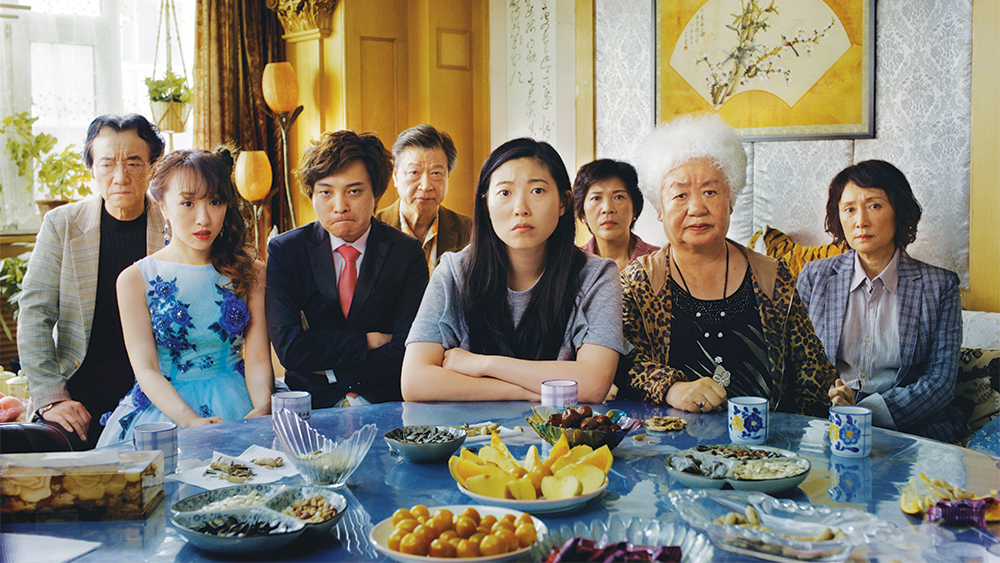
It’s November and the weather is now as bleak as the headlines. Some of the movies are too! Especially if you have to watch four Bergman movies for a class paper!
I think my favourite of those was Cries and Whispers (1972). In typical Bergman fashion, it has a pretty austere style and relies upon the viewers’ patience while he slowly untangles complex emotional conflicts between his characters. But, uncharacteristically, it is a film saturated with colour. It does not seem to be a coincidence that red is such a dominant colour in a film which is so heavily laden with sexual frustration.
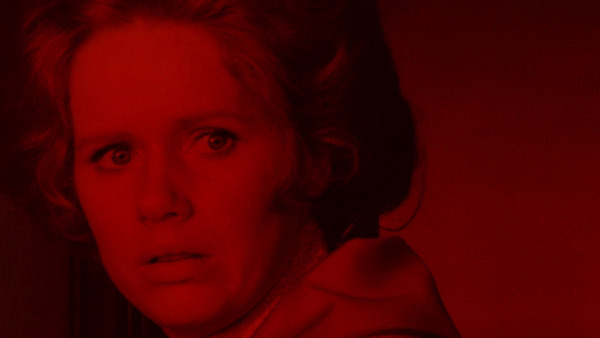
Maria (Liv Ullmann) and Karin (Ingrid Thulin) are estranged sisters, each stuck in loveless marriages with no real intimacy in their lives. The former has engaged in an affair with her child’s doctor, but one scene in which he compares her ageing face with her spiritual decline tells us that he is not ideal company. He pushes her face towards the mirror and forces her to look in a scene which feels like a misogynistic, and, perhaps, hypocritical dissection of a woman under great emotional distress.
Her sister is hardly much better. During dinner with her husband, she smashes a glass of wine. Keeping one shard, she cuts her own vulva and bleeds profusely, later smearing such over her mouth when her husband enters the bedroom. Clearly, she wants to make the concept of sex odious to him; the blood on her face seems to demonstrate that she doesn’t want to talk to him either, so lifeless is their relationship. Their marriage is so warped that it can only disfigure her now, just like the shattered glass.
There are hints that the two could salvage some kind of bond, but their relationship is further strained by their dying sister, Agnes (Harriet Andersson). Her steep decline reminds them how distant they have become; the film’s final scene shows that it was not always this way. Maria tries to synthesise connection with Karin, but the latter is so fearful of the commitment required by such intimacy that she recoils at her touch. Bitter snarls follow.
It is a fascinating film and, like much of Bergman’s work in this period, gloriously brief at 91 minutes. It shares many themes with two other films of this era: Through a Glass Darkly (1961) and The Silence (1963). Warring sisters, families fearful of intimacy and sexual frustration (of which The Silence’s Anna weaponises somewhat beautifully) abound. And all that is without even getting to the stuff on God!
Amidst such intensity it’s sometimes nice to return to something familiar. This week, that was Booksmart (2019), which I have inexplicably seen three times since it arrived last May. I’m so glad I have, particularly given that it has been an experience which I have shared with new people every time.
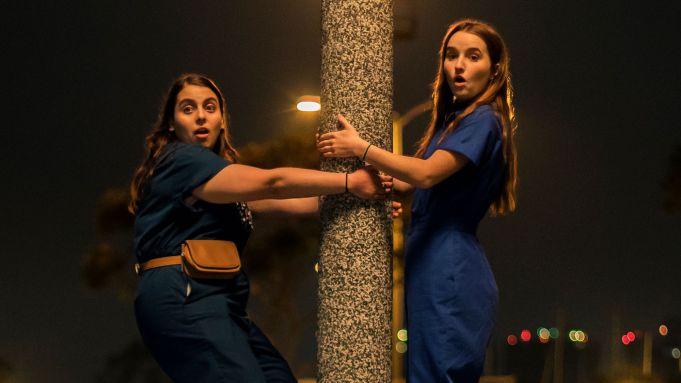
Beanie Feldstein and Kaitlyn Dever are as charming and hilarious as you’ve heard, but the film’s true strength is that it shines a light on every character. None of them are disposable cut-outs made to fill in the background. Director Olivia Wilde offers the kind of stereotypes you would expect in the first act before slowly showing how all of these archetypes are hiding a greater sense of nuance or vulnerability. Molly Gordon and Skyler Gisondo are particularly winning as supporting characters who would normally just be the butt of the joke. Perhaps it is not accidental that the leads find a greater sense of nuance in this transition from adolescence to adulthood.
And then there’s Billie Lourd, whose inexplicable presence in consecutive scenes is increasingly hilarious. It is difficult to execute such an outlandish performance without it feeling like a little much, but she and Wilde find a great balance. It helps that Feldstein and Dever manage to react perfectly almost every time. Don’t let these three slip through your fingers, Hollywood!
Lastly, there is The Farewell, Lulu Wang’s autobiographical drama about a Billi, a Chinese-American woman (Awkwafina), who returns to her birth country to say goodbye to her dying grandmother who, due to a quirk of Chinese culture, has not been told that she is dying.
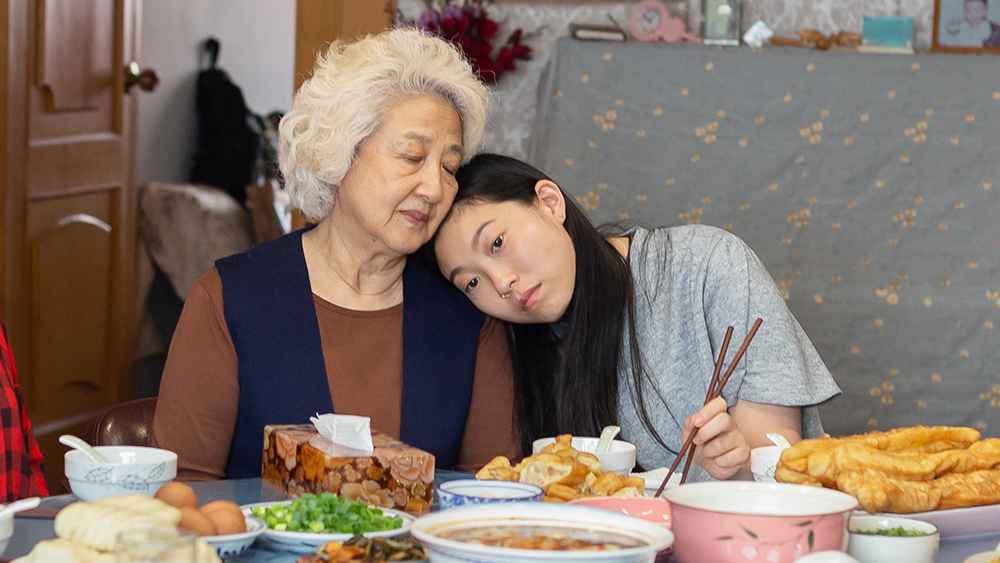
What a premise ! As the film’s title card wryly announces, the story is based on an actual lie told by Wang’s family. Awkwafina is very much a dramatised version of Wang, but such works to the film’s advantage as every emotion she goes through feels authetnic. The film covers a lot of ground: guilt about lying to the grandmother she loves, culture shock in a country she has not lived in for twenty years and linguistic isolation as her Mandarin isn’t quite as good as it often needs to be.
One of the most effective images Wang offers is a shot of an arch in the middle of a roundabout, itself surrounded by nondescript tower blocks. Billi notes that it feels familiar; her family tell her that this is where her grandmothers house, one of her favourite haunts as a child, used to be. Now it is lost, living only in her memory. That the same will soon be true of her Nai Nai is heartbreaking.
It helps that Nai Nai is played so beautifully. Zhao Shuzhen is absurdly charming as the family’s matriarch, simultaneously warm and dismissive, without ever tipping too far one way or the other into cariacture. Her obliviousness to her ultimate fate is wrenching, even more so when the characters around her are so clearly struggling to keep their emotions in check given what they know. At the hospital, Billi confronts her Nai Nai’s doctor about the severity of her condition, but does so in English to spare her grandmother the true details. Not long after, she hammers away at a piano, almost perfectly remembering a melancholic piece on an instrument she earlier told us she hasn’t played in years. It’s funny what the strenght of certain emotions can bring out in us. Lulu Wang understands this better than most.
 On Film